Media Home
 UN Web TV
 UN Audiovisual Library
 UN Photo
WHO / TEDROS PRESSER
Download
There is no media available to download.
Share
STORY: WHO / TEDROS PRESSER
TRT: 5:22
SOURCE: WHO
RESTRICTIONS: NONE
LANGUAGE: ENGLISH / NATS
DATELINE: 15 DECEMBER 2023, GENEVA, SWITZERLAND
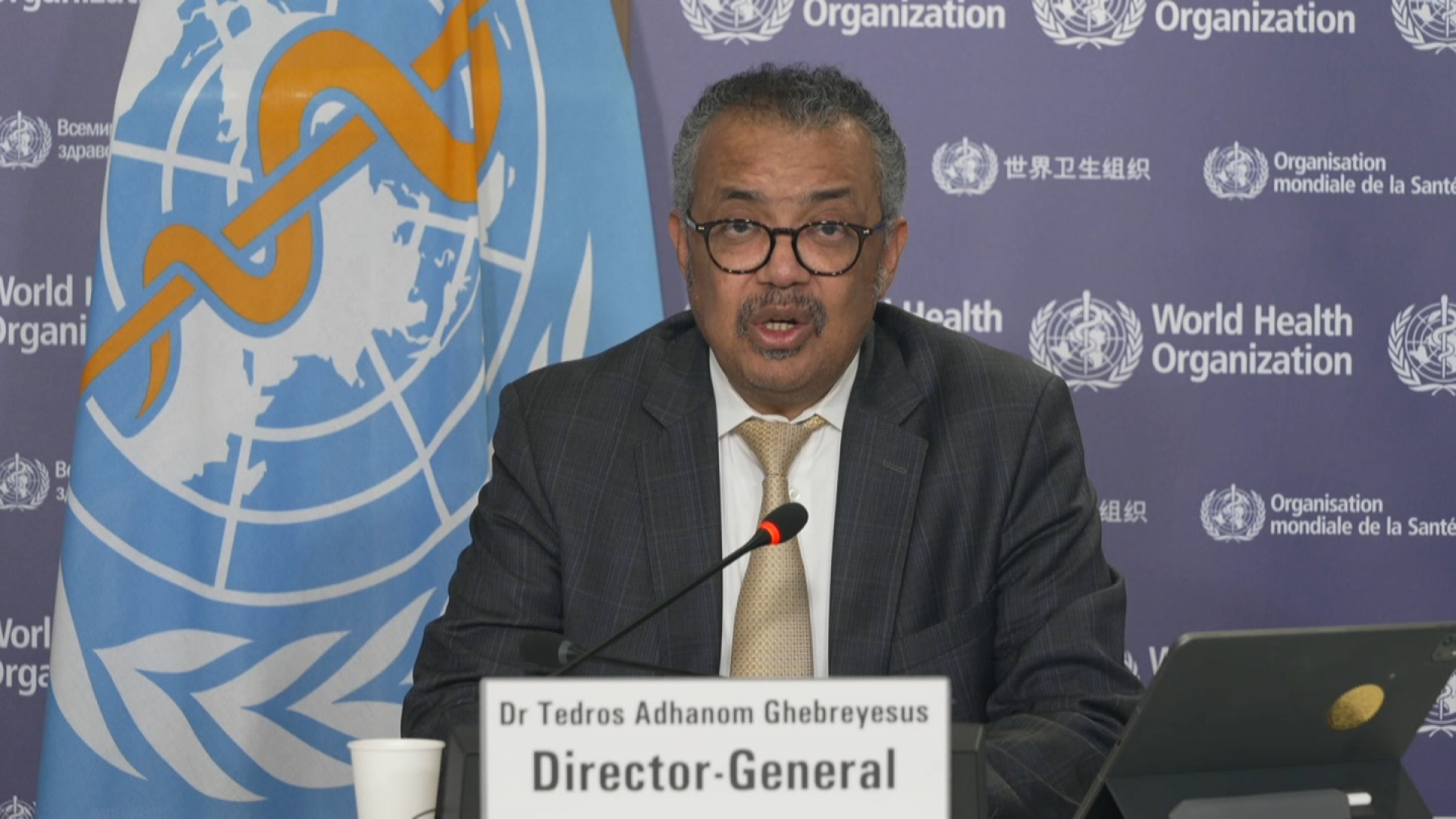
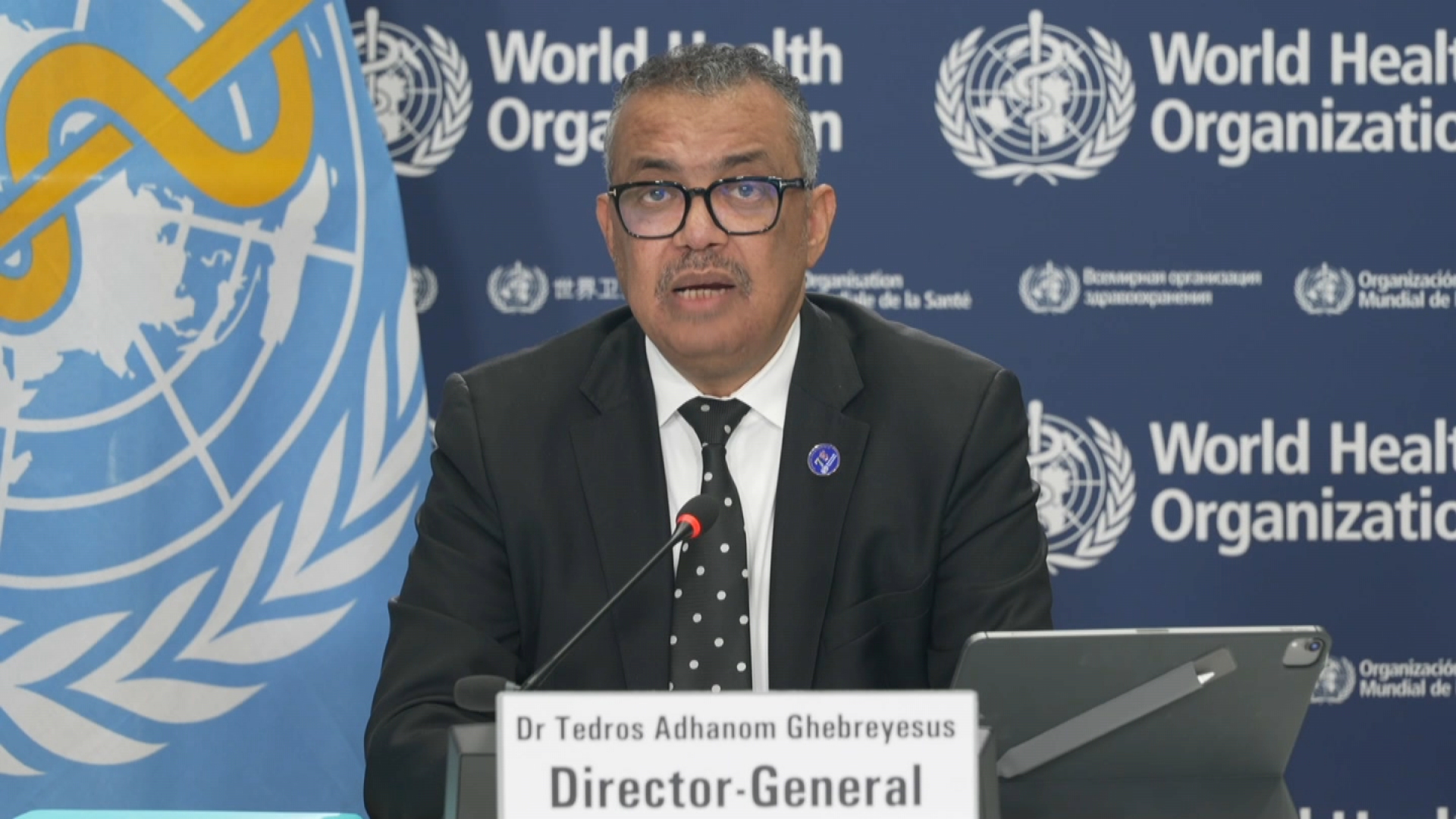
1. Wide shot, press briefing room
2. SOUNDBITE (English) Dr Tedros Adhanom Ghebreyesus, WHO Director-General:
“It has been a year overshadowed by crisis, conflict, divisive politics and the continuing threat of disease outbreaks and the climate crisis.”
3. Wide shot, press briefing room
4. SOUNDBITE (English) Dr Tedros Adhanom Ghebreyesus, WHO Director-General:
“Nowhere and no-one is safe in Gaza, including humanitarian and health workers. More than 130 UN staff have been killed, including our own WHO colleague Dima Alhaj. And humanitarian convoys to deliver aid or transfer patients have been attacked, detained, interrogated and delayed. It is completely unacceptable that health workers have also been detained. The only real remedy is an immediate ceasefire.”
5. Wide shot, press briefing room
6. SOUNDBITE (English) Dr Richard Peeperkorn, WHO Representative, occupied Palestinian territory:
“That of course is very good news. So I think there's good news and I think what we now have to work on as well, how can we make sure that these trucks can go everywhere in Gaza and not just in the south of Gaza, but also to the north of Gaza.”
7. Wide shot, press briefing room
8. SOUNDBITE (English) Dr Tedros Adhanom Ghebreyesus, WHO Director-General
“For the Gazans. I think they are right to be disappointed. They’re right, they’re right to be disappointed with the world in general. First, they are right to be disappointed with the international community. And we are a part of the international community, so of course they will be disappointed with us too. But if they're not disappointed, I would be surprised. We're trying our best. It's not enough. Or whatever they are getting, it's a fraction of what they should get.”
9. Wide shot, press briefing room
10. SOUNDBITE (English) Dr Michael Ryan, Executive Director, WHO Health Emergencies Programme
“The UN simply cannot do our job. We cannot do our work right now because we are blocked and prevented from doing that work. We have restrictions on who we can have in the country we can't get the aid in, and we have huge security access problems. You know that you've been reporting on it for weeks. You've been reporting on it for weeks. So I think it's, it's time that you went and ask some questions of some different sources as to why that situation prevails, because it's not here you're going to get the answer to those questions. It's somewhere else in another press conference with other countries.”
11. Wide shot, press briefing room
12. SOUNDBITE (English) Dr Tedros Adhanom Ghebreyesus, WHO Director-General
“Sudan remains in crisis, after eight months of conflict complicated by massive food insecurity and a rapidly spreading cholera outbreak. Sudan’s health system was already overstretched before the war. Now it’s at breaking point. Critical services have been discontinued in many areas. People are dying from a lack of access to basic and essential healthcare and medication as if the war is not enough.”
13. Wide shot, press briefing room
14. SOUNDBITE (English) Dr Tedros Adhanom Ghebreyesus, WHO Director-General
“In Ethiopia, although the war in Tigray officially ended more than a year ago, the humanitarian crisis has continued. I am especially appalled by the continued use of rape and other forms of gender-based violence.”
15. Wide shot, press briefing room
16. SOUNDBITE (English) Dr Tedros Adhanom Ghebreyesus, WHO Director-General
“Rape as a weapon of war, whether it is Tigray, the DRC, Haiti, Israel or Sudan, is a heinous act and stain on humanity.”
17. Wide shot, press briefing room
18. SOUNDBITE (English) Dr Tedros Adhanom Ghebreyesus, WHO Director-General
“In Haiti, gang violence now affects over 80 percent of the capital Port au Prince, and is also expanding to neighbouring provinces. A massive exodus of trained health care workers seeking to escape the violence – understandably – makes providing health services even more difficult.”
19. Wide shot, press briefing room
20. SOUNDBITE (English) Dr Tedros Adhanom Ghebreyesus, WHO Director-General
“In Myanmar, the protracted conflict, recurrent natural disasters and economic decline have deepened the political, humanitarian, human rights and socio-economic crisis.
Escalation in conflict in several states and regions have now displaced an estimated 2.6 million people.”
21. Wide shot, press briefing room
22. SOUNDBITE (English) Dr Tedros Adhanom Ghebreyesus, WHO Director-General
“In Europe, the Russian Federation’s war in Ukraine is dragging into a third year.”
23. Wide shot, press briefing room
24. SOUNDBITE (English) Dr Teresa Zakaria, Technical Officer, Health Emergencies Interventions, WHO
“The number of attacks happening at the moment in Gaza, for example, since the 7th of October, 231, in the West Bank, 247 then across the world since the start of this year actually, we've documented based on verification, 1204 attacks, resulting in close to 700 deaths in 19 countries and territories. So we are, we are not yet at the number of attacks reported last year. What we are certainly seeing is that since the establishment of our surveillance systems on attacks on health care, the trend is increasing across the globe.”
25. Wide shot, press briefing room
WHO Director-General Tedros Adhanom Ghebreyesus said that the Organization is doing its best in Gaza, but “the only real remedy is an immediate ceasefire.”
Tedros spoke to reporters today (15 Dec) in Geneva, he said, ““It has been a year overshadowed by crisis, conflict, divisive politics and the continuing threat of disease outbreaks and the climate crisis.”
The WHO chief reiterated, “Nowhere and no-one is safe in Gaza, including humanitarian and health workers. More than 130 UN staff have been killed, including our own WHO colleague Dima Alhaj. “
He added, “humanitarian convoys to deliver aid or transfer patients have been attacked, detained, interrogated and delayed. It is completely unacceptable that health workers have also been detained. The only real remedy is an immediate ceasefire.”
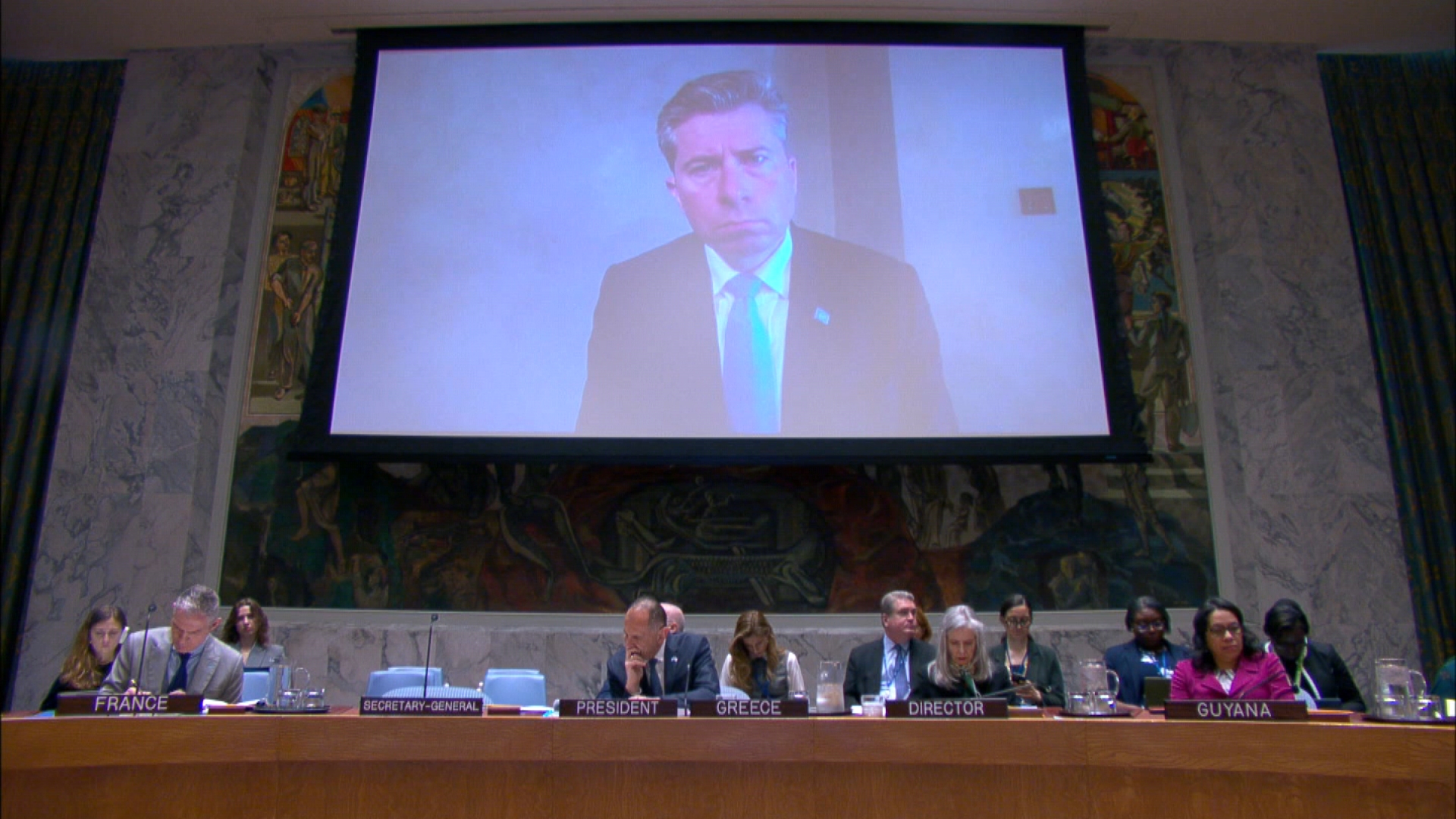
WHO Representative in the Occupied Palestinian Territory, Dr Richard Peeperkorn, spoke via video link.
Asked about the opening of the Kerem Shalom border crossing, he said, “That of course is very good news. So I think there's good news and I think what we now have to work on as well, how can we make sure that these trucks can go everywhere in Gaza and not just in the south of Gaza, but also to the north of Gaza.”
The WHO chief also said, “For the Gazans. I think they are right to be disappointed. They’re right, they’re right to be disappointed with the world in general. First, they are right to be disappointed with the international community. And we are a part of the international community, so of course they will be disappointed with us too. But if they're not disappointed, I would be surprised. We're trying our best. It's not enough. Or whatever they are getting, it's a fraction of what they should get.”
WHO’s senior official Michael Ryan told reporters, “The UN simply cannot do our job. We cannot do our work right now because we are blocked and prevented from doing that work.”
He continued, “We have restrictions on who we can have in the country we can't get the aid in, and we have huge security access problems. You know that you've been reporting on it for weeks. You've been reporting on it for weeks.”
Ryan added, “I think it's, it's time that you went and ask some questions of some different sources as to why that situation prevails, because it's not here you're going to get the answer to those questions. It's somewhere else in another press conference with other countries.”
On Sudan, the Director-General said, “Sudan remains in crisis, after eight months of conflict complicated by massive food insecurity and a rapidly spreading cholera outbreak. Sudan’s health system was already overstretched before the war. Now it’s at breaking point. Critical services have been discontinued in many areas. People are dying from a lack of access to basic and essential healthcare and medication as if the war is not enough.”
On Ethiopia, Tedros said, “although the war in Tigray officially ended more than a year ago, the humanitarian crisis has continued. I am especially appalled by the continued use of rape and other forms of gender-based violence.”
“Rape as a weapon of war, whether it is Tigray, the DRC, Haiti, Israel or Sudan, is a heinous act and stain on humanity,” Director-General also highlighted.
On Haiti, the WHO chief warned that gang violence now affects over 80 percent of the capital Port au Prince, and is also expanding to neighbouring provinces.
“A massive exodus of trained health care workers seeking to escape the violence – understandably – makes providing health services even more difficult,” he added.
On Myanmar, Tedros said, “the protracted conflict, recurrent natural disasters and economic decline have deepened the political, humanitarian, human rights and socio-economic crisis.
Escalation in conflict in several states and regions have now displaced an estimated 2.6 million people.”
“In Europe, the Russian Federation’s war in Ukraine is dragging into a third year,” he also said.
WHO’s Dr Teresa Zakaria told reporters, “The number of attacks happening at the moment in Gaza, for example, since the 7th of October, 231, in the West Bank, 247 then across the world since the start of this year actually, we've documented based on verification, 1204 attacks, resulting in close to 700 deaths in 19 countries and territories. So we are, we are not yet at the number of attacks reported last year. What we are certainly seeing is that since the establishment of our surveillance systems on attacks on health care, the trend is increasing across the globe.”