Media Home
 UN Web TV
 UN Audiovisual Library
 UN Photo
OHCHR / TURK SYRIA MISSING PERSONS
STORY: OHCHR / TURK SYRIA MISSING PERSONS
TRT: 06:26
SOURCE: OHCHR
RESTRICTIONS: NONE
LANGUAGE: ENGLISH / ARABIC / NATS
DATELINE: 25 APRIL 2024, NEW YORK / 21 SEPTEMBER 2023, MONTREUX, SWITZERLAND / 30 SEPTEMBER 2023, PALAIS WILSON, GENEVA SWITZERLAND / FILE
FILE – NEW YORK CITY
1. Wide shot, exterior, UN Headquarters NYC, USA
25 APRIL 2024, NEW YORK
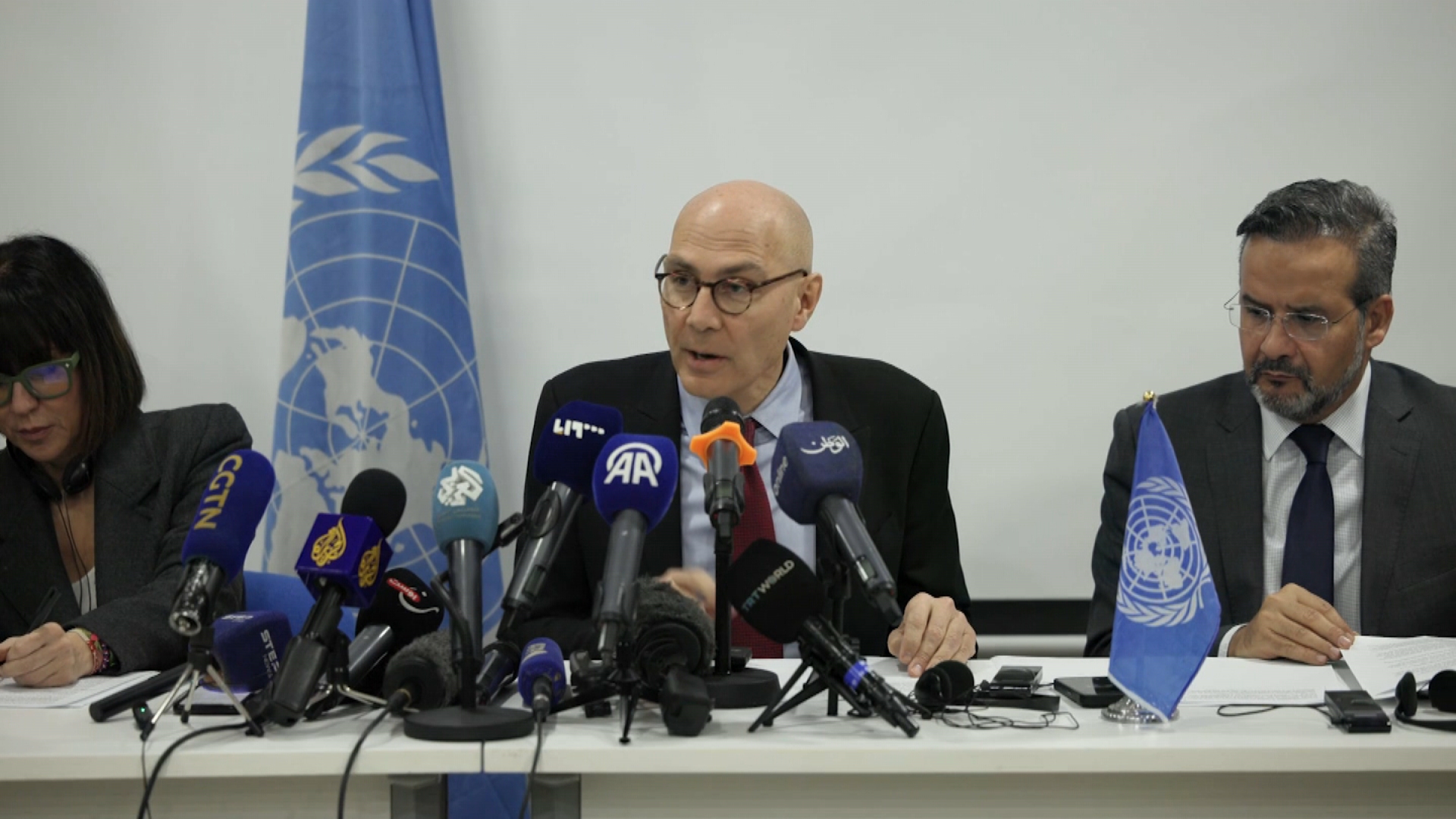
2. SOUNDBITE (English) Volker Türk UN High Commissioner for Human Rights: “Thirteen years of killing; of enforced disappearances, abductions, torture, displacement and deprivation. Thirteen years of terrible loss, and aching grief. The conflict in Syria is an open wound – for millions of Syrian people, above all, including families who long for the return of their missing loved ones, and for answers about what happened to them.”
3. Wide shot, General Assembly Hall UN Headquarters NYC, USA
4. SOUNDBITE (English) Volker Türk UN High Commissioner for Human Rights: “I want to emphasise this point: the Independent Institution will support all victims; and it will search for people who have gone missing on all sides – irrespective of their political affiliation, and why or when they went missing.”
21 SEPTEMBER 2023, MONTREUX, SWITZERLAND
5. Various shots, Hotel du Golf, where meeting of Syrian NGO’s and OHCHR
6. SOUNDBITE (English) Ahmad Helmi, Ahmad Helmi, Syrian, previously detained by the Syrian authorities:
“So, my story started in the Syrian revolution and the beginning of the revolution. I was one of the peaceful, nonviolent activists and I was, part of, coordinating demonstrations asking for, freedom, for democracy and for human rights in Syria.”
7. SOUNDBITE (English) Ahmad Helmi, Ahmad Helmi, Syrian, previously detained by the Syrian authorities:
“As usual and as a regular, practice, I have been subjected to a tremendous amount of torture, sexual violence, psychological, torture and physical torture, sometimes for interrogations and sometimes just for fun. And I was super lucky that my mom fought for, for three years to get me out. And I was lucky to survive. And those three years.”
8. Various shots, interior, meeting of Syrian NGO’s and OHCHR
9. SOUNDBITE (Arabic) Fadwa Mahmoud, Syrian family member of persons forcibly disappeared:
“In terms of feelings, it would be very difficult for me to describe my feelings. I have not given in to my feelings. Since the moment they disappeared, I have never stopped struggling for the cause of the detainees. And to me, it’s no longer the cause of Maher and Abdel Aziz only. It’s not a personal cause anymore, but rather a public one.”
10. SOUNDBITE (Arabic) Fadwa Mahmoud, Syrian family member of persons forcibly disappeared:
“It is crucial that the victims’ families take part in this institution, that they be a founding pillar, because whatever expertise that an international organization can have, it would not be as important as the experience of the Syrians in this domain.”
11. SOUNDBITE (Arabic) Fadwa Mahamoud, Syrian and family member of persons forcibly disappeared:
“There is always hope that we find people alive, of course.”
12. SOUNDBITE (Arabic) Mariam Al-Hallaq, Syrian family member of persons forcibly disappeared:
“When the revolution happened and he took part in it, he got detained twice. He was detained at the University of Damascus and was tortured for 5 days till he died. I was informed of his martyrdom three months later.”
13. SOUNDBITE (Arabic) Mariam Al-Hallaq, family member of persons forcibly disappeared:
“After a year and five months, I received a death certificate stating that my son had died after 5 days of detention. I could not be sure of his death because they did not hand me anything, neither his ID card nor his passport. They just said that he died in a heart attack, that’s it.”
14. SOUNDBITE (English) Volker Türk UN High Commissioner for Human Rights: “I would like to pay tribute to the years of activism of thousands of survivors, families, and civil society groups – including the extraordinary work of Syrian women's organizations – which has been crucial to supporting victims and to advocacy for this Independent Institution.”
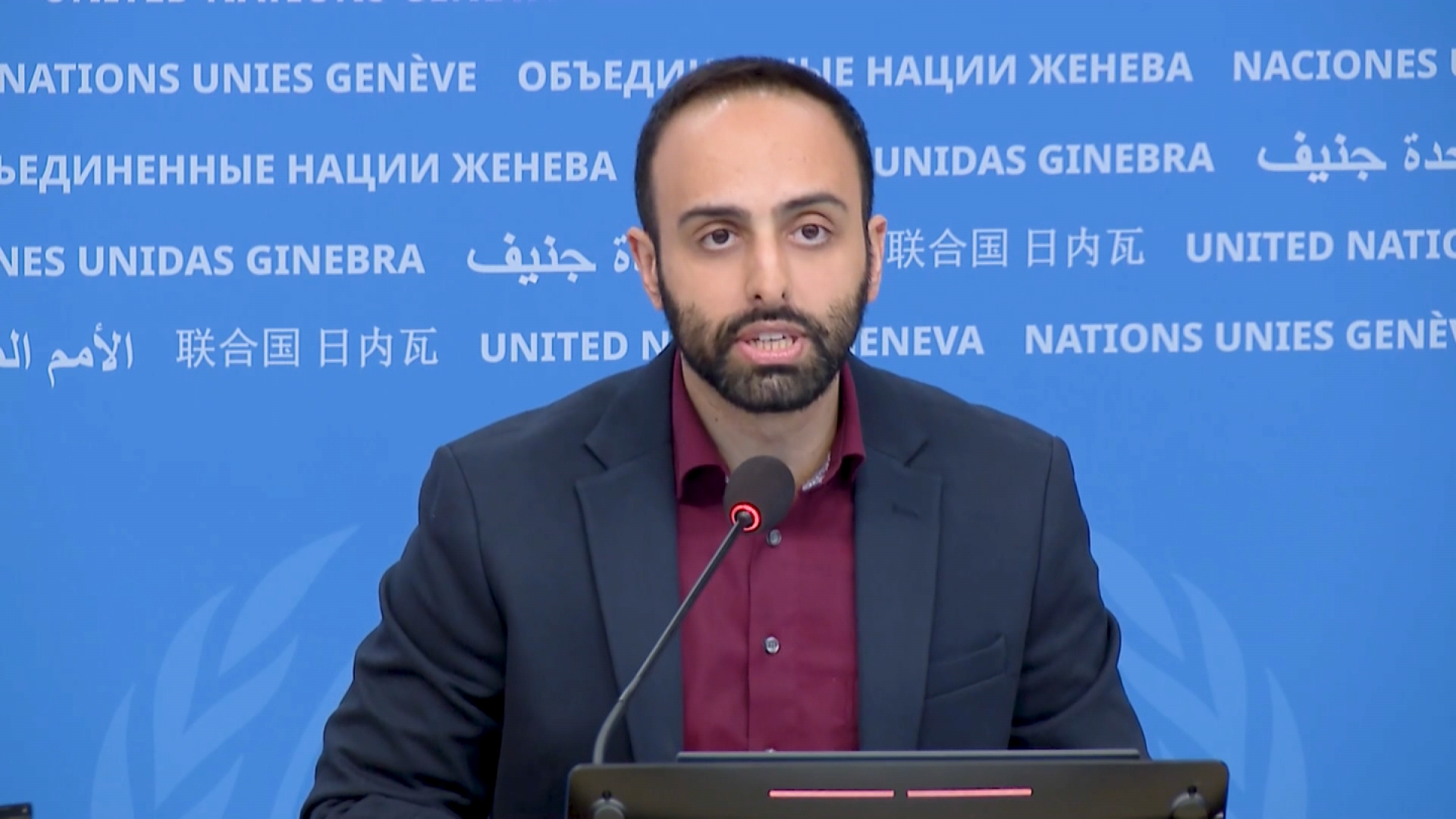
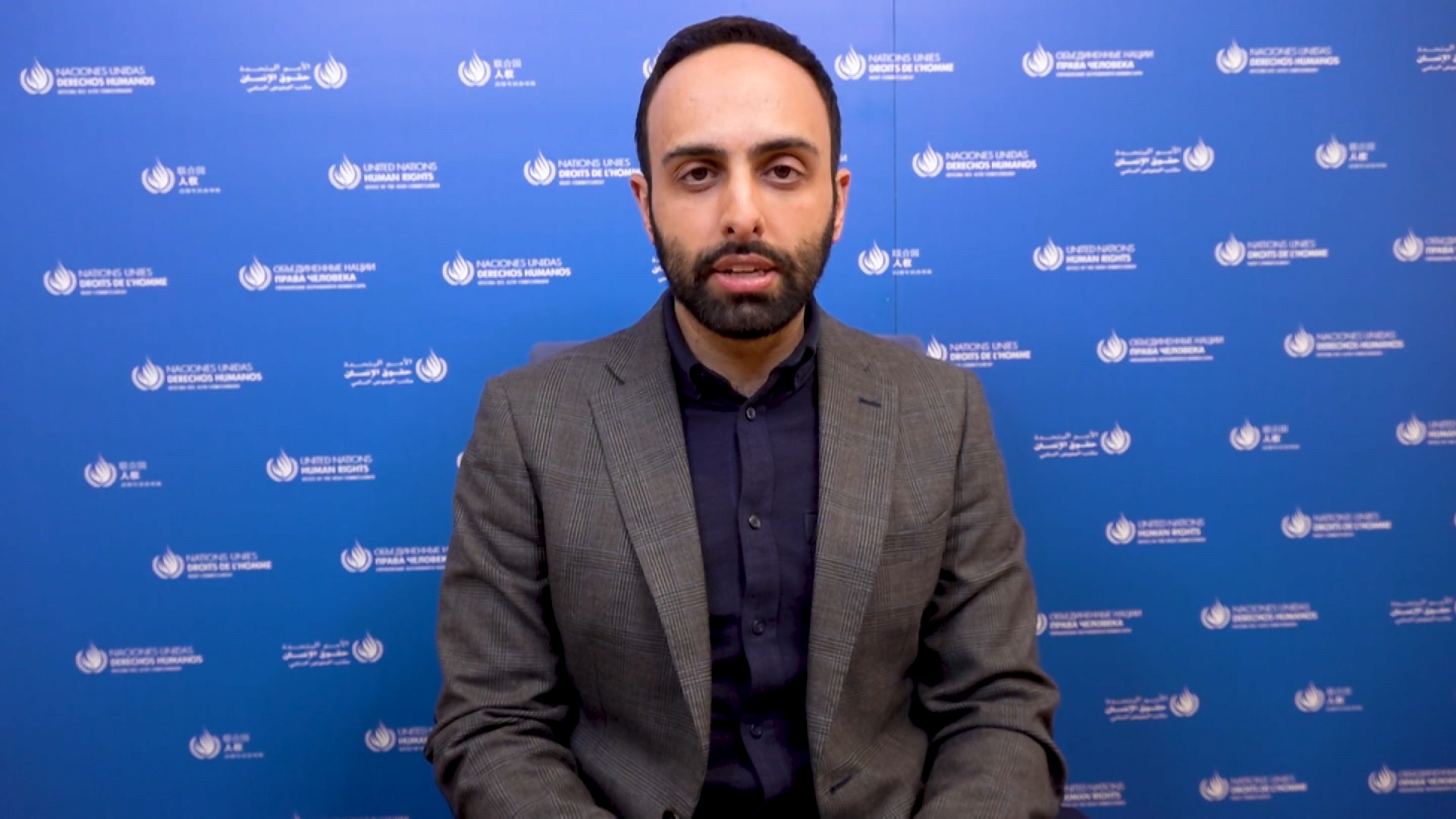
15. SOUNDBITE (English) Dimiter Chalev, head of the UN Human rights office for Syria:
“It is by addressing the right to know and the right to know what has happened. So, it's, search for the truth of finding those who are missing. It is not about perpetrators or criminal accountability.”
16. SOUNDBITE (English) Deputy High Commissioner for Human Rights Nada Al Nashif:
“Every family in Syria knows someone has someone who has gone missing. And over this period, families have been asking for answers. The need to know, is a very consuming need.”
17. SOUNDBITE (English) Deputy High Commissioner for Human Rights Nada Al Nashif:
“I was particularly struck by the women who were speaking to each other which say, at least you know that your husband is dead. I don't know where my son and husband are. And then the second lady says, I may know he's dead. In fact, I have nothing to prove it. And until I have that proof, I cannot stop thinking about it.”
18. SOUNDBITE (English) Ahmad Helmi, Syrian, previously detained by the Syrian authorities:
“To be honest, for me, it's, it's a huge win. First for the victims and survivors’ movement, because this initiative have been conceptualized, lobbied for, campaigned for by the Syrian victims and families and we achieved what we want.”
On 29 June 2023, the General Assembly adopted resolution 77/301 to establish the Independent Institution on missing Persons in the Syrian Arab Republic.
The Institution is mandated to clarify the fate and whereabouts of all missing persons, and closely linked to that, to support all victims, including survivors and family members.
The General Assembly approved the budget to establish the Independent Institution on 24 April 2024.
UN High Commissioner for Human Rights Volker Türk addressed the General Assembly in New York on Thursday (25 Apr).
“Thirteen years of killing; of enforced disappearances, abductions, torture, displacement and deprivation. Thirteen years of terrible loss, and aching grief. The conflict in Syria is an open wound – for millions of Syrian people, above all, including families who long for the return of their missing loved ones, and for answers about what happened to them,” said the High Commissioner.
“I want to emphasise this point: the Independent Institution will support all victims; and it will search for people who have gone missing on all sides – irrespective of their political affiliation, and why or when they went missing,” he added.
In September 2023, family members of missing persons in Syria, and people previously detained arbitrarily by the authorities, met with Deputy High Commissioner for Human Rights Nada Al Nashif in Montreux, Switzerland.
“So, my story started in the Syrian revolution and the beginning of the revolution. I was one of the peaceful, nonviolent activists and I was, part of, coordinating demonstrations asking for, freedom, for democracy and for human rights in Syria,” said Ahmad who was detained by the authorities in 2005.
“As usual and as a regular, practice, I have been subjected to a tremendous amount of torture, sexual violence, psychological, torture and physical torture, sometimes for interrogations and sometimes just for fun,”
“And I was super lucky that my mom fought for, for three years to get me out. And I was lucky to survive. And those three years,” he added.
Survivors have been deeply scarred. Following their release from detention, many – especially women – have been rejected by their communities, creating a feeling of profound alienation. Others, including people now living outside of Syria, struggle to find safety and stability. It will be of great importance to ensure that the Independent Institution can be accessed by people in many different geographic locations.
Fadwa has been looking for her loved ones who have been forcibly disappeared by the Syrian authorities. Se is a champion for the cause of all families and victims.
“In terms of feelings, it would be very difficult for me to describe my feelings I have not given in to my feelings. Since the moment they disappeared, I have never stopped struggling for the cause of the detainees. And to me, it’s no longer the cause of Maher and Abdel Aziz only. It’s not a personal cause anymore, but rather a public one.”
“It is crucial that the victims’ families take part in this institution, that they be a founding pillar, because whatever expertise that an international organization can have, it would not be as important as the experience of the Syrians in this domain.” Said Fadwa.
“There is always hope that we find people alive, of course,” She added.
Many of the missing are men, and in their absence, their wives, mothers and sisters are forced to overcome great difficulties to support their families. In a context of entrenched gender discrimination, these women frequently face legal barriers to obtaining custody of their children. They may not be able to obtain documents attesting to their personal status, property ownership or tenancy. Children, too, may be refused official documentation – which in effect restricts their access to education and health care. Lack of adequate documentation may even mean that women cannot travel with their own children.
Mariam Hallaq is one of the mothers who are still looking for answers.
“When the revolution happened and he took part in it, he got detained twice. He was detained at the University of Damascus and was tortured for 5 days till he died. I was informed of his martyrdom three months later,” said Mariam.
“After a year and five months, I received a death certificate stating that my son had died after 5 days of detention. I could not be sure of his death because they did not hand me anything, neither his ID card nor his passport. They just said that he died in a heart attack that's it,” she added.
“I would like to pay tribute to the years of activism of thousands of survivors, families, and civil society groups – including the extraordinary work of Syrian women's organizations – which has been crucial to supporting victims and to advocacy for this Independent Institution,” said Volker Türk, UN High Commissioner for Human Rights.
Victims and survivors will be central to every aspect of this Institution. Search and other forms of support are inextricably intertwined in its mandate, and they will be the central aims of its operations, in coordination with families and their representatives.
“It is by addressing the right to know and the right to know what has happened. So, it's, search for the truth of finding those who are missing. It is not about perpetrators or criminal accountability,” said Dimiter Chalev, head of the UN Human rights office for Syria.
“Every family in Syria knows someone has someone who has gone missing. And over this period, families have been asking for answers. The need to know, is a very consuming need,” said Deputy High Commissioner for Human Rights Nada Al Nashif.
“I was particularly struck by the women who were speaking to each other which say, at least you know that your husband is dead. I don't know where my son and husband are. And then the second lady says, I may know he's dead. In fact, I have nothing to prove it. And until I have that proof, I cannot stop thinking about it,” she added.
“To be honest, for me, it's, it's a huge win. First for the victims and survivors’ movement, because this initiative have been conceptualized, lobbied for, campaigned for by the Syrian victims and families and we achieved what we want.” concluded Ahmad.