Media Home
 UN Web TV
 UN Audiovisual Library
 UN Photo
OCHA / CAR DISPLACEMENT
STORY: OCHA / CAR DISPLACEMENT
TRT: 3:52
SOURCE: OCHA
RESTRICTIONS: PLEASE CREDIT OCHA ON SCREEN
LANGUAGE: FRENCH / SANGO / NATS
DATELINE: 15 APRIL 2024, BRIA, HAUTE-KOTTO PREFECTURE, CENTRAL AFRICAN REPUBLIC
1. Aerial shot, town of Bria
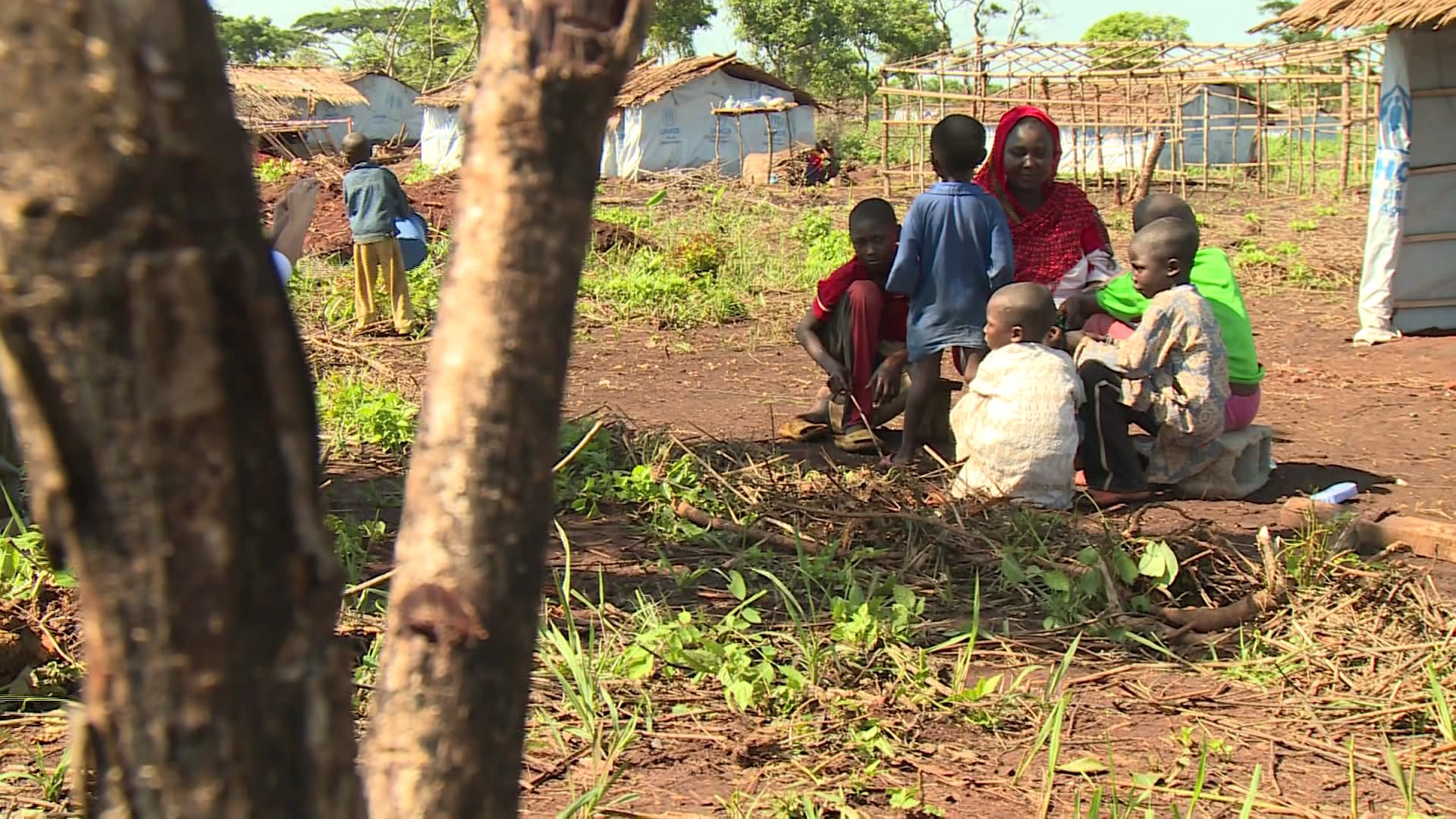
2. Wide shot, People walking around the PK3 site for Internally Displaced People in Bria.
3. Pan shot, the PK3 site.
4. Wide shot, two young boys are transporting a bunch of sheet metal on a two-wheel cart in the PK3
site.
5. Wide shot, a young boy is walking down the streets of the PK3 site carrying a large plate of fruits.
6. Wide shot, a woman is busy braiding a kid on a mat in front of a house while others are looking at
them.
7. Wide shot, a woman draws water from a well while others are waiting for their turn.
8. Close up, the woman drawing water from a well.
9. Wide shot, a group of people is sitting in front of a house with pots and a water jerrycan in front of
them.
10. Close up, the remains of an extinguished fire.
11. Close up, the remains of kids clothings.
12. Wide shot, Raphael Dekeuzago is counting money in his shop.
13. Wide shot, the inside of Raphael’s shop with medicines, padlocks, keys, blades, and torches.
14.Wide shot, Raphael is serving a customer.
15.SOUNDBITE (Sango) Raphael Dekeuzago, Former displaced person:
“The financial assistance I received allowed me to start a business. I saved the profits made to start
other activities. I plan to split the money saved into two. One part will be used to pay the
dowry for my future wife, hoping that God blesses us with children and that we can live
together happily as a family.”
16. Med shot, Raphael pedals his wheelchair to his house.
17. Med shot, Raphael is entering his house.
18. Med shot, Raphael is listening to music sat on a chair in his house.
19. Close up, Raphael’s face then pan down on his radio set.
20. Close up, the upper level of Raphael’s house from outside.
21. SOUNDBITE (French) Enzo Senga, Humanitarian affairs officer, OCHA:
“The CAR Humanitarian Fund, managed by OCHA, enables humanitarians to timely reach the most
vulnerable. This helps people get shelter, water, household items, and cash for income generating activities.”
22. Wide shot, a house built for an internally displaced person.
23. Close up, on a slab listing the organizations that supported the durable solutions project.
24. Wide shot, a motorcycle is passing in the street in front of a product stall and a small boy.
25. Close up, a pile of soaps.
26. Wide shot, a young boy is carrying kitchen items on a road with a two-wheel cart.
27. Wide shot, woman and a man are sitting at a table in front a house eating.
28. Close up, a woman eating
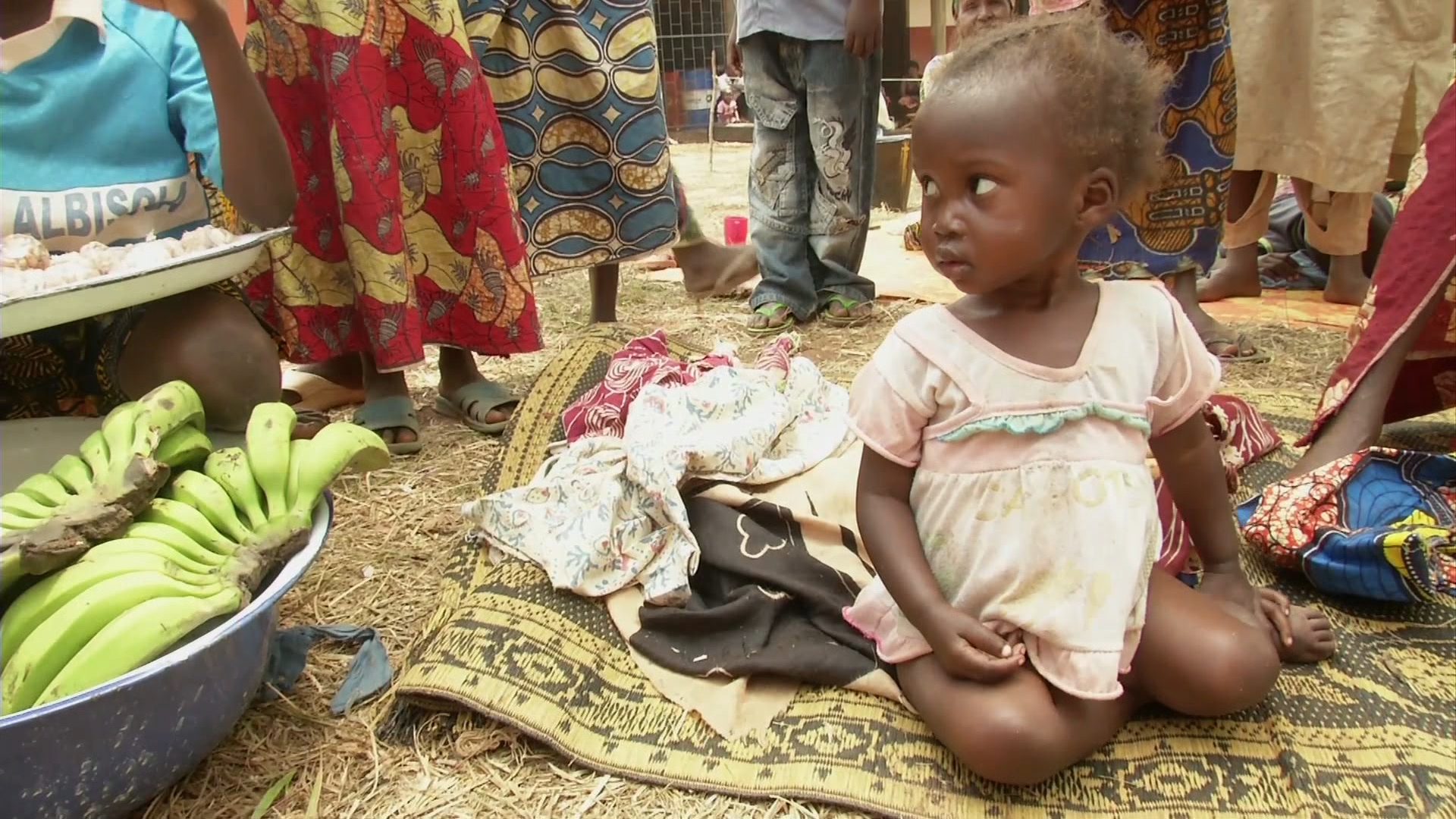
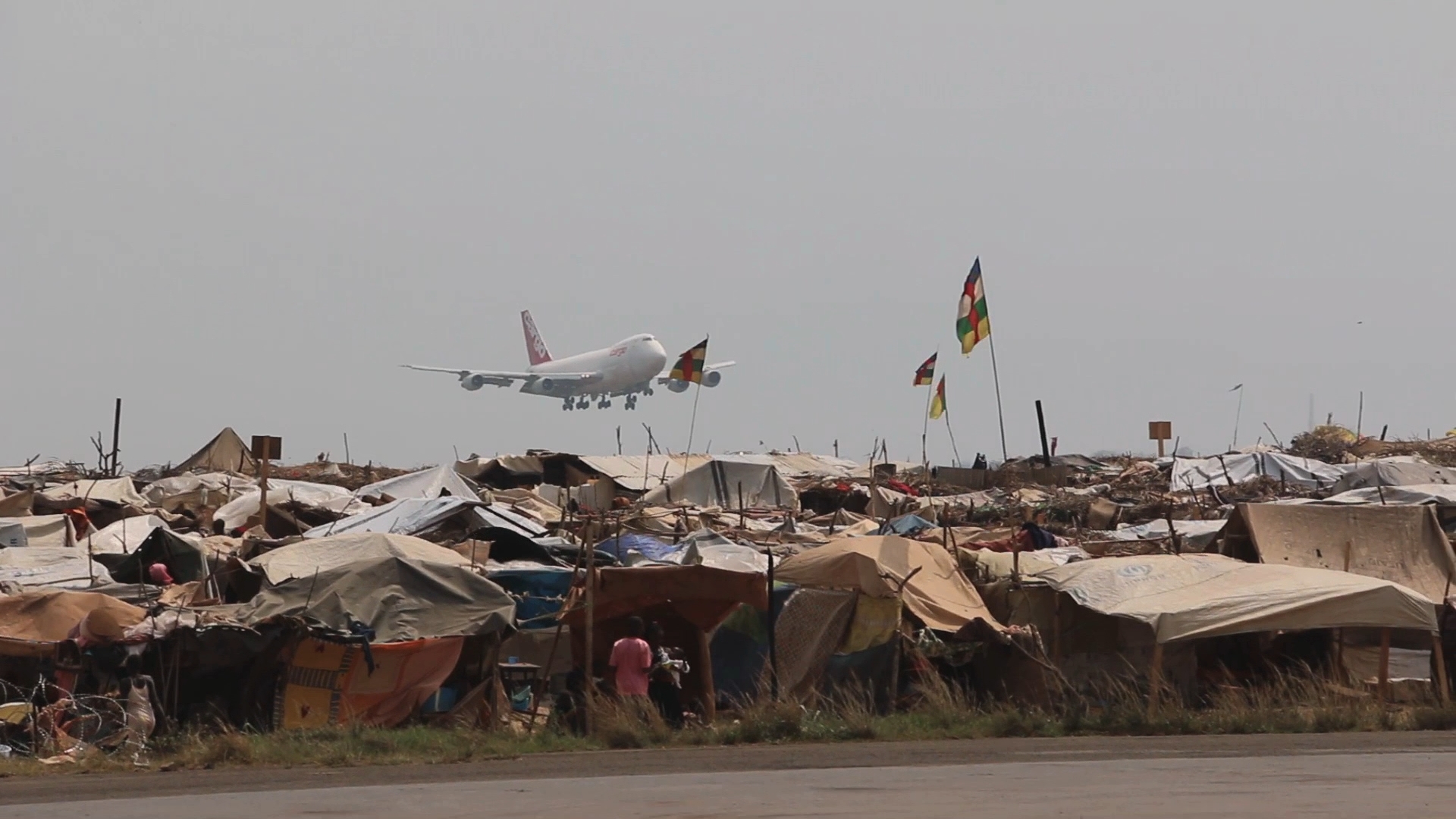
After several years of conflict, one in five Central Africans is displaced, either inside the country or living abroad. They fled their houses due to insecurity caused by the violence of numerous armed factions. Many have settled on the PK3 site in Bria, the largest site for internally displaced people (IDP) in the country, situated in the Haute-Kotto prefecture, eastern part of the Central African Republic (CAR).
Life in the IDP sites is often difficult and marked by problems linked to water supply, lack of sanitation and intercommunal clashes. In some regions, like in Bria, where security is improving, people have now new opportunities to settle down off-site for a safer and better life.
Raphael Dekeuzago, 41, comes from the neighbouring prefecture of Ouaka. When the war broke out, he fled his home and sought refuge in Bria at the PK3 site. But even there, life wasn't easy for him. Getting water to drink and take a shower was very complicated. Due to his disability, Raphael needed help drawing water from the well, and unfortunately this help was rarely available. The process often took several hours because of long waiting queues. After living on the site for several years, he decided to leave due to these difficult living conditions and settle down in a district of Bria.
The Humanitarian Fund for the Central African Republic (CAR HF), managed by OCHA, supports projects providing more sustainable solutions for displaced people. With an array of partners like UNHCR, USAID, and IOM, the Fund contributes to the construction of shelters and helps people get water, household items, and cash for income-generating activities.
The support provided by the Office for the Coordination of Humanitarian Affairs (OCHA) and its partners allowed Raphael to build a house and start his own business, where he sells various items such as toothbrushes, toothpaste, sugar, blades, keys, cookies, and candies.
SOUNDBITE (Sango) Raphael Dekeuzago, Former displaced person:
“The financial assistance I received allowed me to start a business. I saved the profits made to start other activities. I plan to split the money saved into two. One part will be used to pay the dowry for my future wife, hoping that God blesses us with children and that we can live together happily as a family.”
Now, Raphael lives right next to a water point and can ask the neighborhood children for help with fetching water. He lives in better conditions and can meet his own needs.
There are currently about 500,000 IDPs in the Central African Republic, accounting for over 8 percent of the population. Displaced people often face threats of eviction, increasing insecurity on the sites, and community tensions.
The Humanitarian Response Plan for the Central African Republic in 2024 targets nearly 429,000 of the most vulnerable people living in sites, with host families, in host communities, or in returnee situations. OCHA and its partners will facilitate access to civil documentation for returnees and support community-based protection mechanisms to prevent and report violence, especially against women and children, and to promote social cohesion.
After decades of conflict, political instability, and slow growth, the Central African Republic has one of the highest poverty rates in the world: nearly seven out of ten people are in extreme poverty—65.7 percent of Central Africans live on less than $2.15 a day, and more than half do not have enough money to afford sufficient food.