Media Home
 UN Web TV
 UN Audiovisual Library
 UN Photo
WHO / HEALTH EMERGENCIES
Download
There is no media available to download.
Share
STORY: WHO / HEALTH EMERGENCIES
TRT: 8:18
SOURCE: WHO
RESTRICTIONS: PLEASE CREDIT WHO ON SCREEN
LANGUAGE: ENGLISH / NATS
DATELINE: 08 MAY 2024, GENEVA, SWITZERLAND
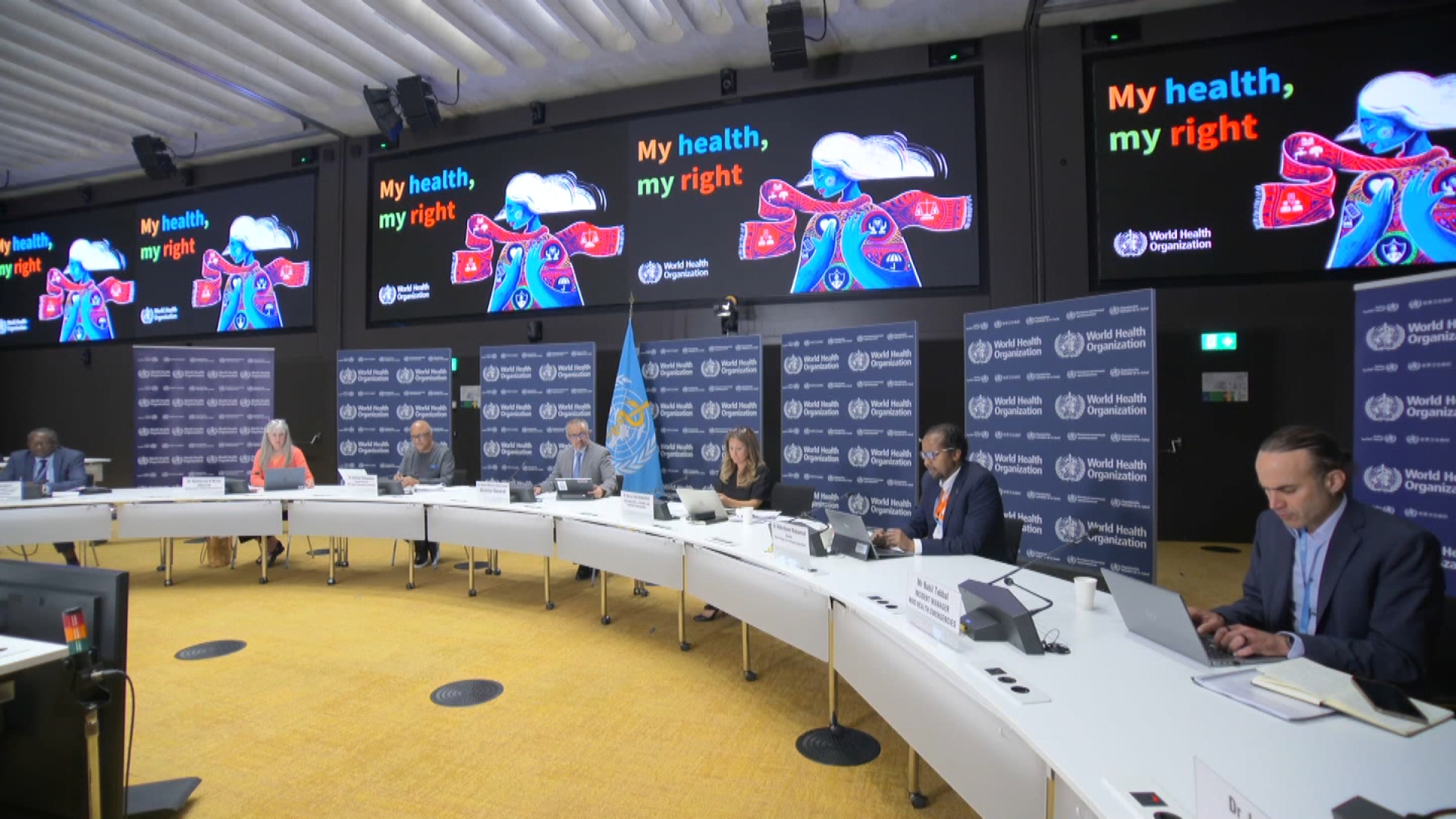
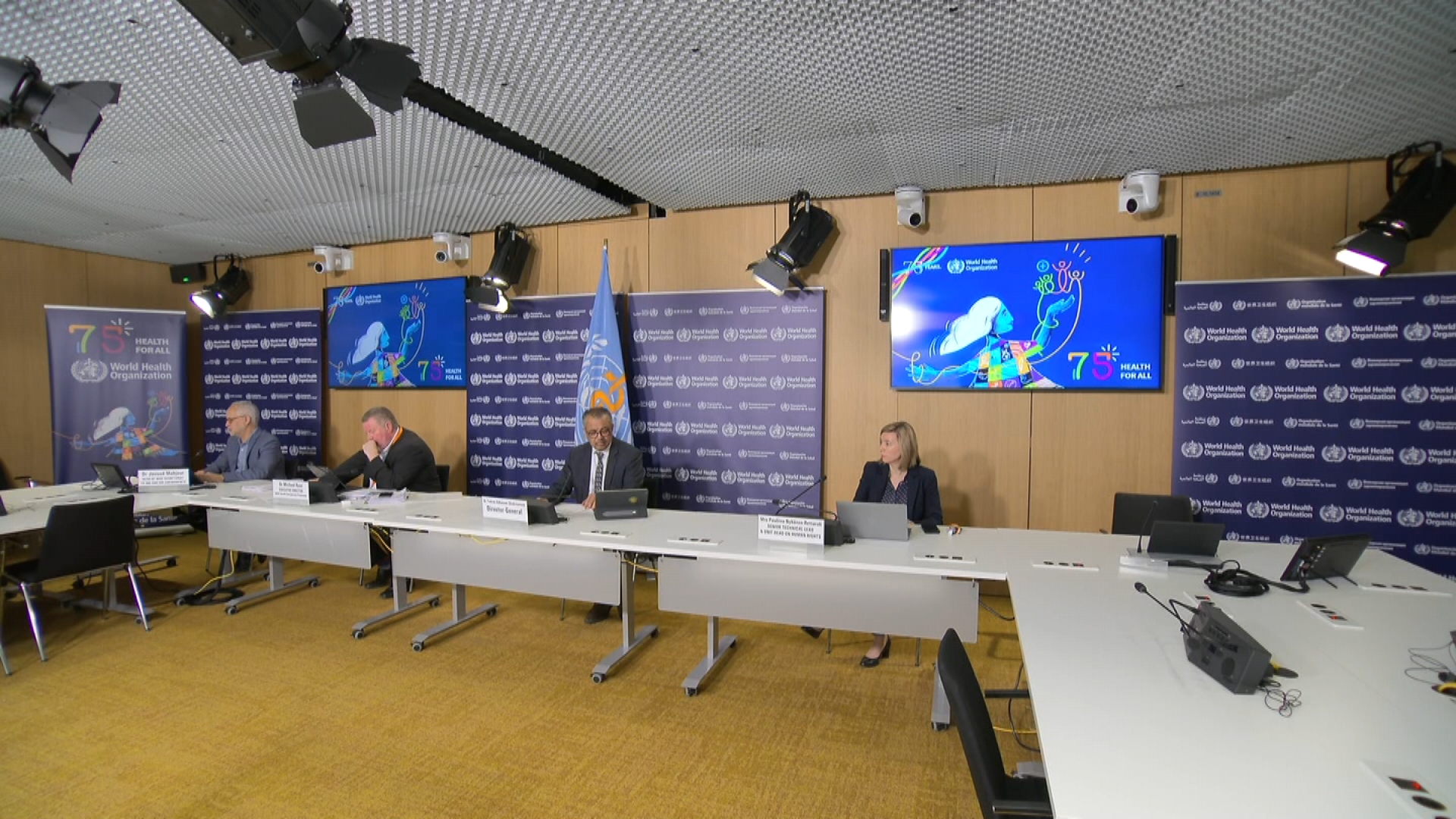
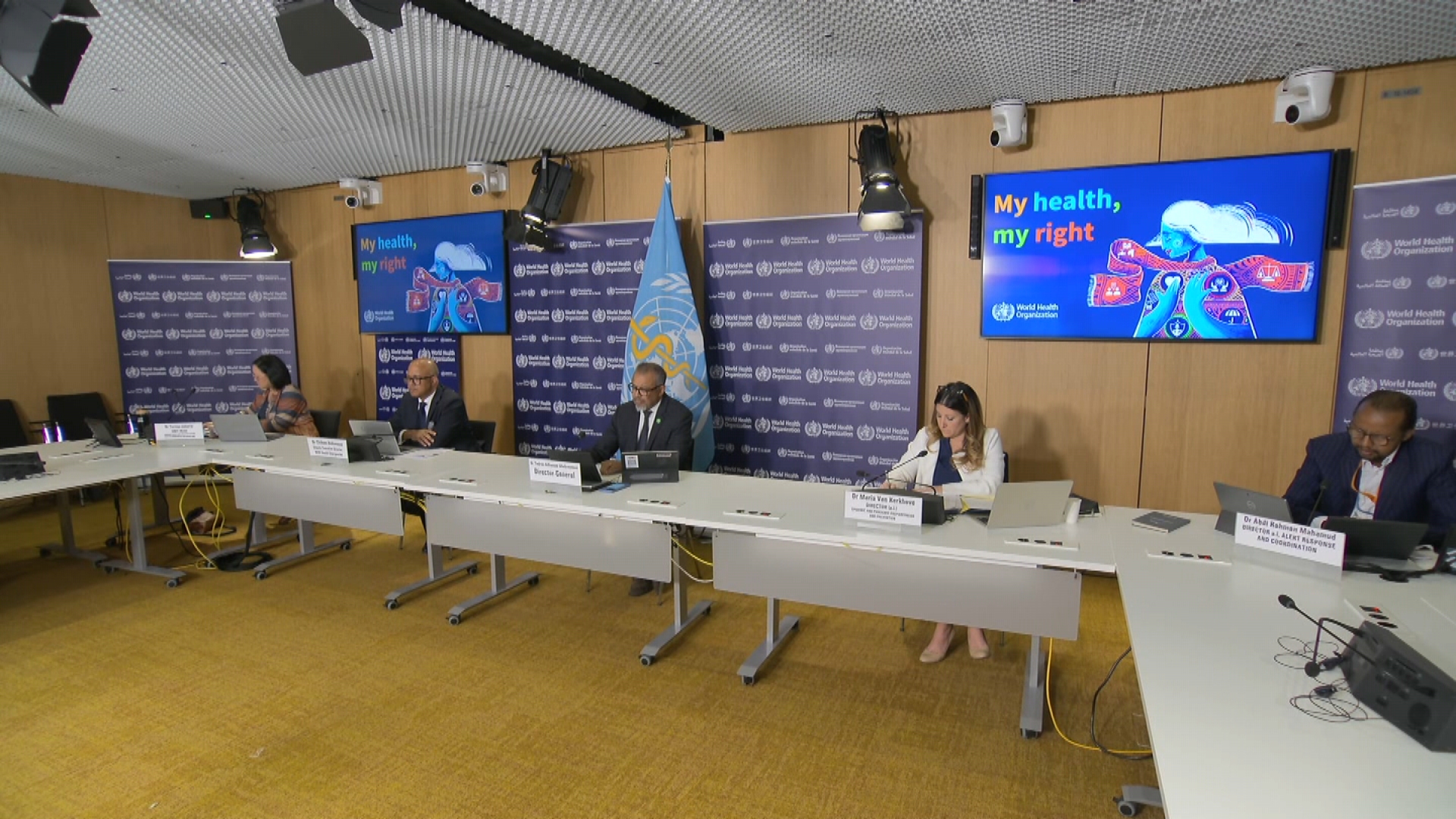
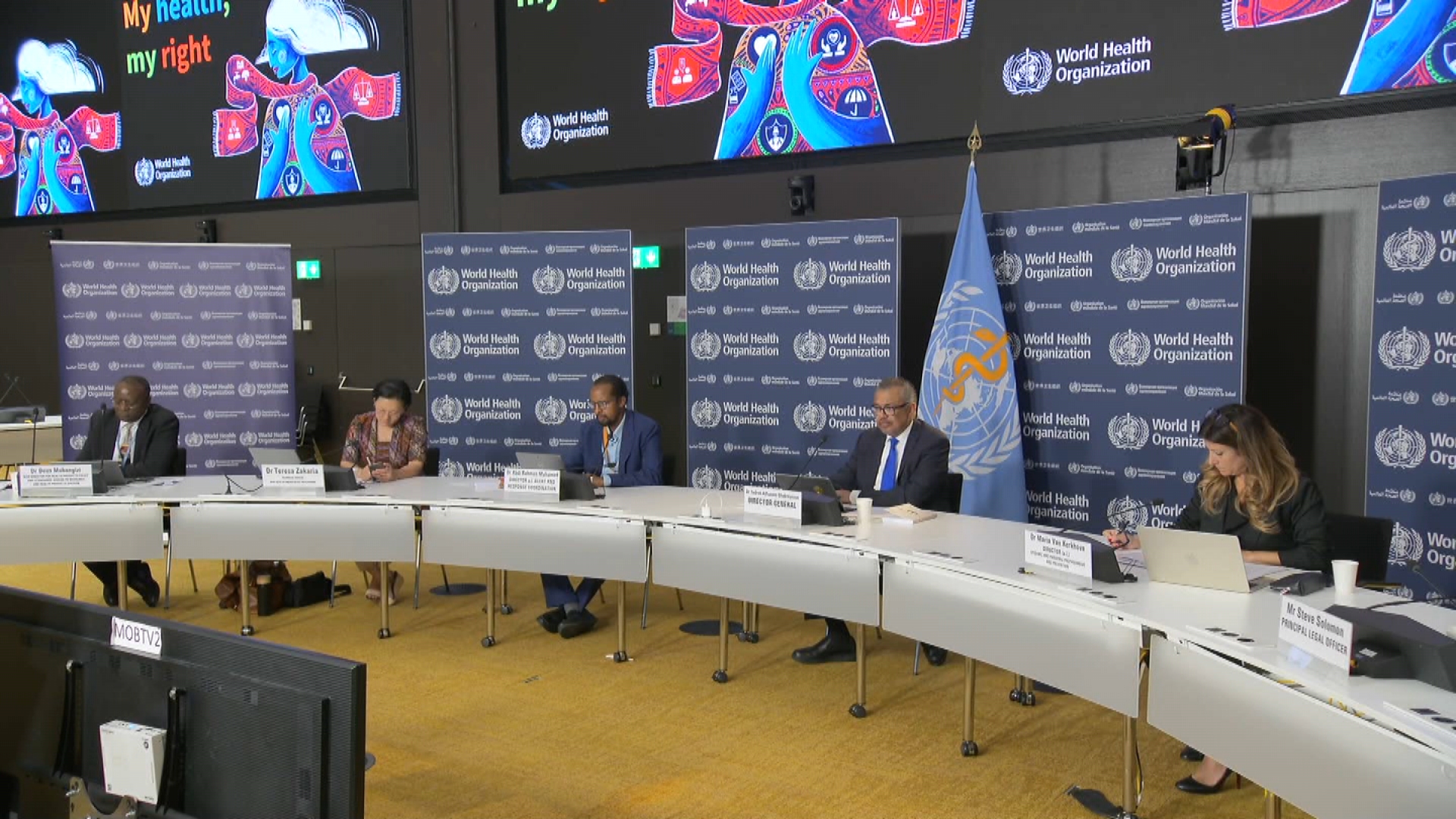
1. Wide shot, press briefing room
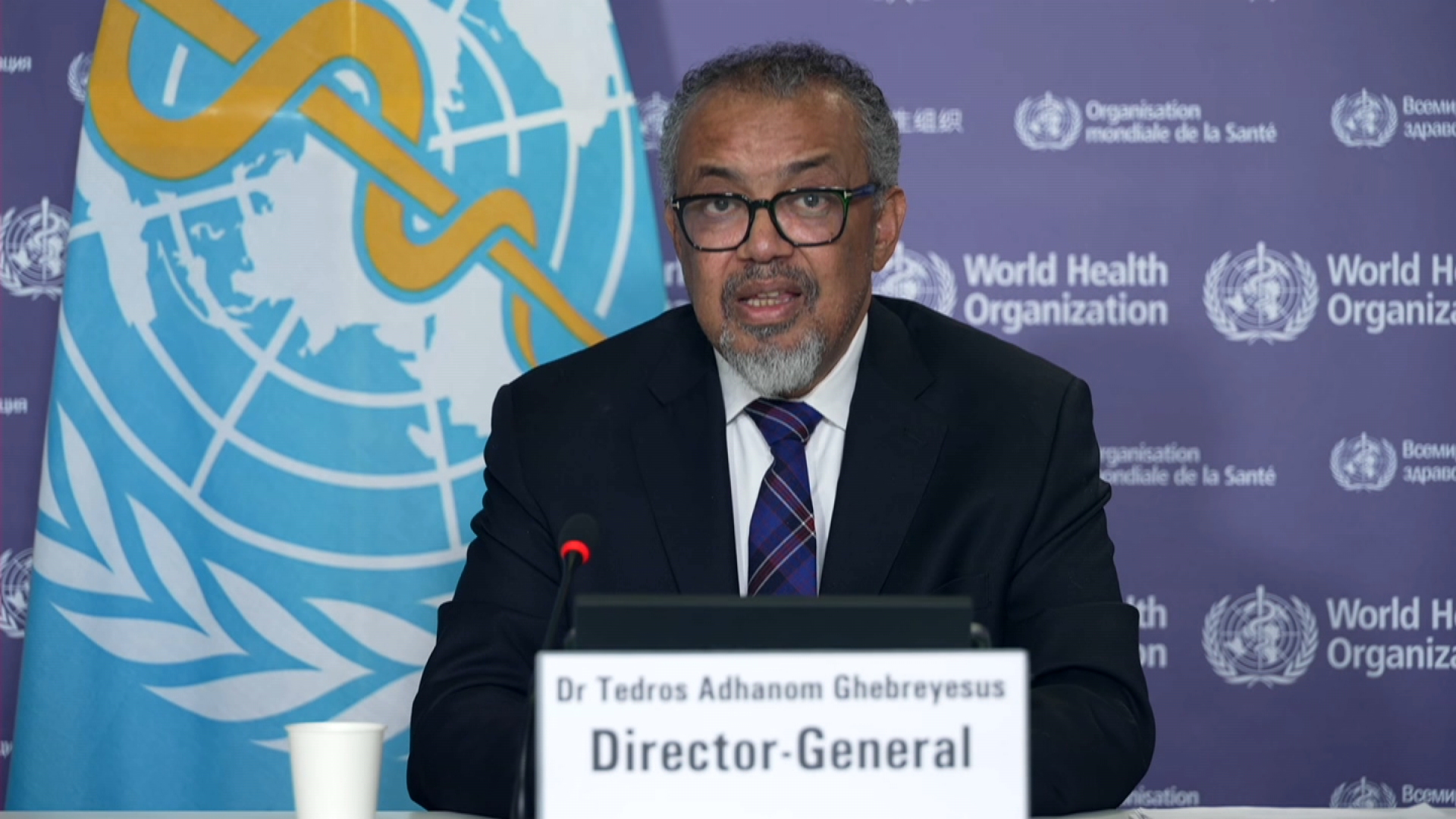
2. SOUNDBITE (English) Dr Tedros Adhanom Ghebreyesus, WHO Director-General:
“First, to Gaza, where we are deeply concerned about Israel’s increased military activities in Rafah, where most of Gaza’s people have fled for safety. An estimated 30 to 40 thousand people have left Rafah for Khan Younis and Deir al-Balah, but more than 1.4 million people remain at risk in Rafah, including 600 thousand children. Already, one of Rafah’s three hospitals – the An-Najjar hospital – has had to shut down and its patients have moved elsewhere, and hospital staff are removing supplies and some equipment to safeguard them.”
3. Wide shot, press briefing room
4. SOUNDBITE (English) Dr Tedros Adhanom Ghebreyesus, WHO Director-General:
“The Rafah crossing from Egypt into Gaza remains closed, which is a major access points for supplies into Gaza. Fuel that we expected to be allowed in today has not been allowed in, meaning we only have enough fuel to run health services in the south for three more days. WHO has pre-positioned some supplies in warehouses and hospitals, but without more aid flowing into Gaza, we cannot sustain our lifesaving support to hospitals.”
5. Wide shot, press briefing room
6. SOUNDBITE (English) Dr Richard Peeperkorn, WHO Representative, occupied Palestinian territory:
“Maybe the most the important element, what we all need, humanitarians, is fuel, fuel, fuel, fuel. Then of course, also for the humanitarian aid but also staff movement and medivac. So, I want to stress again, without fuel, all of the humanitarian operations, including hospital operation, they come to a halt. In the south, our estimation is that the hospitals only have fuel for 2-3 days left.”
7. Wide shot, press briefing room
8. SOUNDBITE (English) Dr Tedros Adhanom Ghebreyesus, WHO Director-General:
“WHO has no intention of withdrawing from Rafah and will stay and deliver alongside our partners. WHO is coordinating the work of 20 Emergency Medical Teams in Gaza, comprising 179 internationals from 30 countries, working alongside 800 local staff. These teams are embedded in 10 existing hospitals, and have established five field hospitals. They have provided almost 400 thousand consultations, performed more than 18 thousand surgeries, and added more than 500 additional hospital beds.”
9. Wide shot, press briefing room
10. SOUNDBITE (English) Dr Tedros Adhanom Ghebreyesus, WHO Director-General:
“A ceasefire is needed urgently for the sake of humanity. WHO calls for removal of all obstacles to the delivery of urgent humanitarian assistance into and across Gaza, at the scale that is required.”
11. Wide shot, press briefing room
12. SOUNDBITE (English) Dr Michael Ryan, Executive Director, WHO Health Emergencies Programme:
“This has been characterised as a restricted military incursion or a limited offensive and the first act of that is to cut off the two lifelines to 2.5 million people in Gaza. The first act is to stop the fuel, stop the food, to stop the medicine, at source, at the border, I don't call that limited and I don’t call that restricted, I call that a re-imposition of total blockade on nearly 2.5 million civilians, who are already starving, who are already dying from preventable diseases and who need our protection.”
13. Wide shot, press briefing room
14. SOUNDBITE (English) Dr Tedros Adhanom Ghebreyesus, WHO Director-General:
“Now to Sudan, where more than a year of fighting has left the country facing a humanitarian disaster. More than 15,000 deaths and 33,000 injuries have been reported since the conflict began in April last year. 15 million people are in need of urgent humanitarian health assistance. Almost 9 million people are displaced, half of them children, with extremely limited access to health services.”
15. Wide shot, press briefing room
16. SOUNDBITE (English) Dr Tedros Adhanom Ghebreyesus, WHO Director-General:
“In neighbouring Chad, an outbreak of Hepatitis E has been declared, with more than 2,000 cases and 7 deaths, mainly among Sudanese refugees. WHO has deployed a team to support the response. Most of all, we call for a ceasefire and a comprehensive peace process for Sudan. It is time to silence the guns and raise the volume for peace. The best medicine is peace.”
17. Wide shot, press briefing room
18. SOUNDBITE (English) Dr Tedros Adhanom Ghebreyesus, WHO Director-General:
“Now to the United States, and the outbreak of H5N1 avian influenza among dairy cattle. So far, 36 dairy herds have been infected in nine states. Only one human case has been reported, at least 220 people are being monitored and at least 30 have been tested. However, many more people have been exposed to infected animals, and it is important that all those exposed are tested or monitored, and receive care if needed.”
19. Wide shot, press briefing room
20. SOUNDBITE (English) Dr Tedros Adhanom Ghebreyesus, WHO Director-General:
“The virus has been detected in raw milk in the US, but preliminary tests show that pasteurization kills the virus. WHO’s standing advice in all countries is that people should consume pasteurized milk. Based on the available information, WHO continues to assess the public health risk posed by H5N1 avian influenza to be low, and low-to-moderate for people exposed to infected animals.”
21. Wide shot, press briefing room
22. SOUNDBITE (English) Dr Maria Van Kerkhove, Director (a.i.) Epidemic and Pandemic Preparedness and Prevention, WHO:
:We have not seen human-to-human transmission of this particular virus, this H5N1, however, we do have a system that is in place, it is based on the global influenza response system or GISRIS, and also the PIP framework that we have, the Pandemic Influenza Preparedness Framework that came into effect in 2021, GISRIS has been in operation for 70 years. And through the systems, there is an ongoing risk assessment of the viruses to look at the viruses themselves, the different mutations and the characteristics of those viruses and through that system there are candidate vaccine viruses that are recommended to be considered for production. And within that system we have two that are H5N1 viruses that could be used to ramp up the vaccine production. We have not triggered the system. We do not need to trigger the system. And through the PIP framework, through the relationships we have with manufactures we have access to real-time production of H5N1 vaccines should they start to be produced.:
23. Wide shot, press briefing room
24. SOUNDBITE (English) Dr Michael Ryan, Executive Director, WHO Health Emergencies Programme:
“Nobody is suggesting that H5N1 is the new next pandemic. I don't believe anyone can predict that. But it is certainly concerning when a virus like this begins to infect multiple mammalian species, which means that the virus is adapting to mammalian species, which are more like us than birds and therefore there is a higher level of alert. A higher level of alert doesn’t mean a prediction that this will become a pandemic but we must be vigilant.”
25. Wide shot, press briefing room
26. SOUNDBITE (English) Dr Abdi Rahman Mahamud, Director (a.i) for the Alert and Response Coordination
“We are aware of two suspected viral haemorrhagic fever cases from southern Kivu in the Democratic Republic of Congo that were referred to Burundi.”
27. Wide shot, press briefing room
28. SOUNDBITE (English) Dr Abdi Rahman Mahamud, Director (a.i) for the Alert and Response Coordination
“DRC has responding to multiple outbreaks of Ebola, they do have the response capacity and have started an investigation, sent their multi-disciplinary team there and conducting with the child came from around 75 contacts have been traced and the team is out in the field. So in summary, this is a close collaboration between the two countries, our team there in the field office, the regional office are supporting the government.”
29. Wide shot, press briefing room
World Health Organization (WHO) Director-General, Tedros Adhanom Ghebreyesus, said, “WHO has no intention of withdrawing from Rafah and will stay and deliver alongside our partners.”
Speaking to reporters today in Geneva (08 May), Tedros said that who is “deeply concerned about Israel’s increased military activities in Rafah, where most of Gaza’s people have fled for safety.”
He continued, “An estimated 30 to 40 thousand people have left Rafah for Khan Younis and Deir al-Balah, but more than 1.4 million people remain at risk in Rafah, including 600 thousand children. Already, one of Rafah’s three hospitals – the An-Najjar hospital – has had to shut down and its patients have moved elsewhere, and hospital staff are removing supplies and some equipment to safeguard them.”
The Director-General also said, “The Rafah crossing from Egypt into Gaza remains closed, which is a major access points for supplies into Gaza. Fuel that we expected to be allowed in today has not been allowed in, meaning we only have enough fuel to run health services in the south for three more days.”
Tedros added, “WHO has pre-positioned some supplies in warehouses and hospitals, but without more aid flowing into Gaza, we cannot sustain our lifesaving support to hospitals.”
WHO’s Representative, occupied Palestinian territory, Dr Richard Peeperkorn said,
“Maybe the most the important element, what we all need, humanitarians, is fuel, fuel, fuel, fuel. Then of course, also for the humanitarian aid but also staff movement and medivac.”
He stressed, “without fuel, all of the humanitarian operations, including hospital operation, they come to a halt. In the south, our estimation is that the hospitals only have fuel for 2-3 days left.”
WHO Director-General Tedros Adhanom Ghebreyesus reaffirmed that WHO has no intention of withdrawing from Rafah and will stay and deliver alongside its partners.
He said, “WHO is coordinating the work of 20 Emergency Medical Teams in Gaza, comprising 179 internationals from 30 countries, working alongside 800 local staff. These teams are embedded in 10 existing hospitals, and have established five field hospitals. They have provided almost 400 thousand consultations, performed more than 18 thousand surgeries, and added more than 500 additional hospital beds.”
Tedros reiterated, “A ceasefire is needed urgently for the sake of humanity. WHO calls for removal of all obstacles to the delivery of urgent humanitarian assistance into and across Gaza, at the scale that is required.”
WHO’s Michael Ryan told reporters, “This has been characterised as a restricted military incursion or a limited offensive and the first act of that is to cut off the two lifelines to 2.5 million people in Gaza. The first act is to stop the fuel, stop the food, to stop the medicine, at source, at the border, I don't call that limited and I don’t call that restricted, I call that a re-imposition of total blockade on nearly 2.5 million civilians, who are already starving, who are already dying from preventable diseases and who need our protection.”
Move onto Sudan, WHO Director-General Tedros Adhanom Ghebreyesus, said, “more than a year of fighting has left the country facing a humanitarian disaster. More than 15,000 deaths and 33,000 injuries have been reported since the conflict began in April last year. 15 million people are in need of urgent humanitarian health assistance. Almost 9 million people are displaced, half of them children, with extremely limited access to health services.”
Tedros also said, “In neighbouring Chad, an outbreak of Hepatitis E has been declared, with more than 2,000 cases and 7 deaths, mainly among Sudanese refugees. WHO has deployed a team to support the response.”
He reiterated, “Most of all, we call for a ceasefire and a comprehensive peace process for Sudan. It is time to silence the guns and raise the volume for peace. The best medicine is peace.”
On United States, Tedros noted about the outbreak of H5N1 avian influenza among dairy cattle.
“So far, 36 dairy herds have been infected in nine states. Only one human case has been reported, at least 220 people are being monitored and at least 30 have been tested. However, many more people have been exposed to infected animals, and it is important that all those exposed are tested or monitored, and receive care if needed,” he said.
The WHO chief also said, “The virus has been detected in raw milk in the US, but preliminary tests show that pasteurization kills the virus.”
He added, “WHO’s standing advice in all countries is that people should consume pasteurized milk. Based on the available information, WHO continues to assess the public health risk posed by H5N1 avian influenza to be low, and low-to-moderate for people exposed to infected animals.”
WHO’s Dr Maria Van Kerkhove told reporters, “We have not seen human-to-human transmission of this particular virus, this H5N1, however, we do have a system that is in place, it is based on the global influenza response system or GISRIS, and also the PIP framework that we have, the Pandemic Influenza Preparedness Framework that came into effect in 2021, GISRIS has been in operation for 70 years.”
She continued, “through the systems, there is an ongoing risk assessment of the viruses to look at the viruses themselves, the different mutations and the characteristics of those viruses and through that system there are candidate vaccine viruses that are recommended to be considered for production. And within that system we have two that are H5N1 viruses that could be used to ramp up the vaccine production. We have not triggered the system. We do not need to trigger the system. And through the PIP framework, through the relationships we have with manufactures we have access to real-time production of H5N1 vaccines should they start to be produced.”
WHO’s Dr Michael Ryan said, “Nobody is suggesting that H5N1 is the new next pandemic. I don't believe anyone can predict that. But it is certainly concerning when a virus like this begins to infect multiple mammalian species, which means that the virus is adapting to mammalian species, which are more like us than birds and therefore there is a higher level of alert.”
“A higher level of alert doesn’t mean a prediction that this will become a pandemic but we must be vigilant,” Ryan added.
On the Democratic Republic of Congo, Dr Abdi Rahman Mahamud, Director (a.i) for the Alert and Response Coordination, said, “We are aware of two suspected viral haemorrhagic fever cases from southern Kivu in the Democratic Republic of Congo that were referred to Burundi.”
Mahamud added, “DRC has responding to multiple outbreaks of Ebola, they do have the response capacity and have started an investigation, sent their multi-disciplinary team there and conducting with the child came from around 75 contacts have been traced and the team is out in the field. So in summary, this is a close collaboration between the two countries, our team there in the field office, the regional office are supporting the government.”