Media Home
 UN Web TV
 UN Photo
Unifeed
MOZAMBIQUE / MATERNAL MORTALITY
STORY: MOZAMBIQUE/MATERNAL MORTALITY
TRT:3:20
SOURCE: UNTV/UNFPA
RESTRICTIONS:
LANGUAGE: ENGLISH/DIALECT OF SHONA/PORTUGESE
DATELINE: MARCH & MAY 20, 2013 ESPUNGABERA, MOZAMBIQUE / SITA 2
1. Wide shot, boats by the shore
2. Wide shot, sailors on a boat
3. Wide shot, sailors bringing catch on shore
4. Close up, sailors legs wading though water
5. Med shot, customers sorting though the catch
6. Close up, hands sifting through the catch
7. Med shot, Ilse Guambe, 15, working in field
8. Close up, Ilse’s face
9. Med shot, Ilse holding her baby
10. Wide shot, Ilse taking care of her baby
11. SOUNDBITE (Portugese) Ilse Guambe, 15-years-old, child bride:
“After my baby was born, my parents sent me to live at my boyfriend’s parents place – I was insulted by his parents, I wasn’t welcome at all.”
12. Wide shot, women walking in the street
13. Close up, women’s faces
14. SOUNDBITE (English), Dr. Babatunde Osotimehin, the Executive Director of UNFPA, The United Nation’s Population Fund:
“These deaths can be avoided. By making sure that women and girls have access to family planning and quality affordable health supplies, we can ensure that they can reach their full potential and contribute to society.”
15. Wide shot, Isle outside her hut with her baby
16. Wide shot, Essita Mulhanga, 16, and her husband being met by nurse in waiting room
17. Close up, Essita’s slowly shuffling
18. Close up, Essita’s face
19. Med shot, Essita and her husband siting
20. SOUNDBITE (Shona Dialect) Essita Mulhanga, 16-years-old, fistula sufferer:
“I had to deliver at home. My husband was not at home to help me. After delivering, this problem of being unable to control my urine started.”
21. Wide shot, women doing laundry in a river
22. Close up, women cleaning clothes
23. Med shot, baby on river bank
24. Med shot, women walking with babies on their backs
25. Wide shot, Essita getting prepped for surgery
26. SOUNDBITE (English) Dr. Babatunde Osotimehin, the Executive Director of UNFPA, The United Nation’s Population Fund:
“That is unacceptable in today’s world. It also speaks to, in my view, the value of women in our societies and the fact that we do not invest enough in our girls and our women. We need to redouble our efforts to improve these women’s lives. We know what we need to do and how and where to do it.”
27. Wide shot, Essita being operated on
28. Close up, Essita grimacing
28. Wide shot, Essita being operated on
29. SOUNDBITE (Shona dialect) Essitia:
“After treatment I would like to have kids, and would like to see them studying to become doctors or teachers.”
30. Wide shot, Essitia sleeping in the recovery room
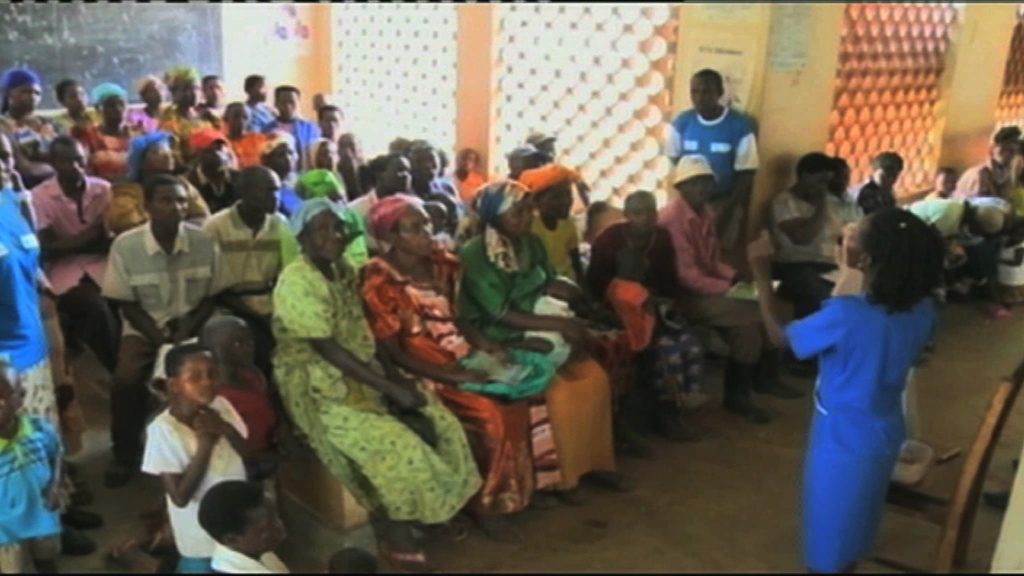
Mozambique has made remarkable strides in recovering from two decades of civil war. But not everyone is able to participate in the country’s new opportunities.
Fifteen-year-old Ilse Guambe, married off at the age of thirteen, was unable to finish school and her life was about to change irrevocably.
SOUNDBITE (Portugese) Ilse Guambe, 15-years-old, child bride:
"After my baby was born, my parents sent me to live at my boyfriend’s parents place – I was insulted by his parents, I wasn’t welcome at all.”
In Mozambique, more than half of all young girls are married before the age of 18, one of the highest rates of child marriage in the world. And not every adolescent girl or woman gets the chance to safely deliver their babies.
Almost 500 women and young girls out of every 100,000 die during childbirth in Mozambique compared with four in a developed country like Sweden.
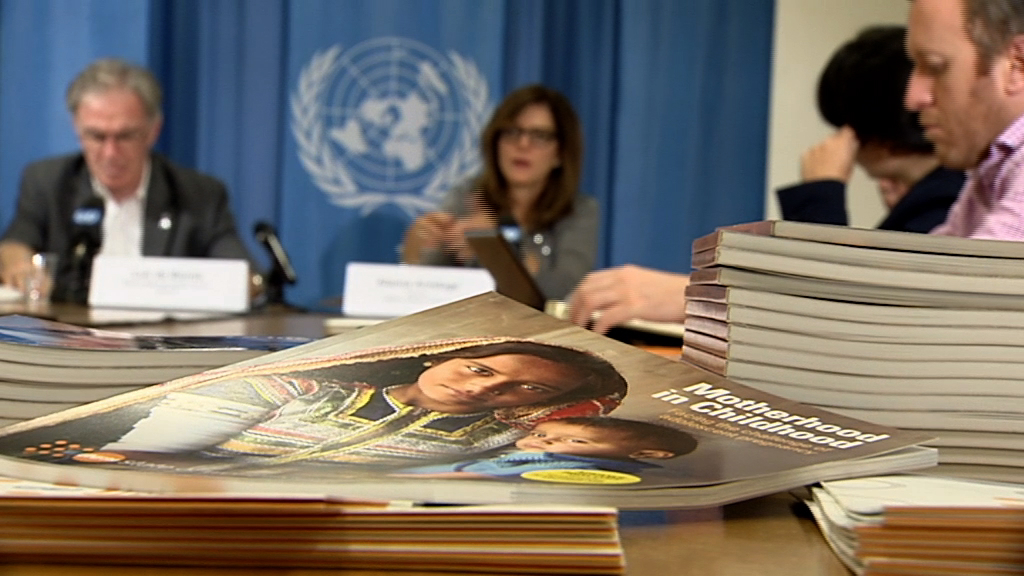
Which is why The United Nations Population Fund, UNFPA, is making a call to accelerate action towards improving the health of women around the world. Something that Mandy Kibel, Media Advisor at UNFPA, says is possible.
SOUNDBITE (English), Mandy Kibel, UNFPA Media Advisor, The United Nation’s Population Fund:
“These deaths can be avoided. By making sure that women and girls have access to family planning and quality affordable health supplies, we can ensure that they can reach their full potential and contribute to society.”
But not every girl manages to escape such a situation like Ilse, who was able to move back in with her family where her mother helps her care for her baby.
Essita Mulhanga of Mozambique is a 16-year-old suffering from a fistula that occurred during a prolonged, obstructed labor that puts both the mother and child at risk.
A fistula is a devastating injury that can occur during childbirth when medical services are not available.
Prolonged, obstructed labor can lead to a hole, or fistula, in the birth canal causing a leaking of urine and/or feces.
SOUNDBITE (Dialect of Shona) Essita Mulhanga, 16-years-old, fistula sufferer:
“I had to deliver at home. My husband was not at home to help me. After delivering, this problem of being unable to control my urine started.”
It is estimated that two to three million women and girls the developing world still suffer from fistula. And that tragically, more than 50,000 new cases develop each year.
While obstetric fistula has been virtually eliminated in industrialized nations, its victims are often amongst the poorest and hardest to reach, frequently with limited access to proper health care.
This is something Kibel believes speaks to more than just what medical treatments are at their disposal.
SOUNDBITE (English), Mandy Kibel, UNFPA Media Advisor, The United Nation’s Population Fund:
“That is unacceptable in today’s world. It also speaks, in large extent, to the value, or the lack of value, that we place on women and girls in our society and to the lack of investment in women and girls. We need to redouble our efforts to make sure that woman and girls are placed at the very center of our development agenda. We know what needs to be done. We know where it needs to be done. And it’s just a question of will. We need to make a decision as a society, as the international community, as humanity, that women and girls are worth saving.”
And this can help prevent other women from going through what Essitia has or perhaps even worse.
So while specialized surgery may be able to repair most fistulas, sometimes, more than one operation may be required to do so. As is the case with Essitia, who will undergo surgery again to help her recover and help her towards a brighter future.
SOUNDBITE (Dialect of Shona), Essitia:
“After treatment I would like to have kids, and would like to see them studying to become doctors or teachers.”
Download
There is no media available to download.
Related Content
UNFPA / GAZA MOBILE MATERNITY UNIT